
TLDR
Paris is divided into 20 arrondissements that spiral outward from the center like a snail shell. Each one has a distinct personality. The central ones (1st-4th) pack in the big-name sights and the highest prices. The Left Bank (5th-7th) has a literary, intellectual atmosphere. The 8th and 16th are grand and expensive. The 9th-11th offer nightlife, canals, and more local flavor. The 12th arrondissement, where the hotel sits near Gare de Lyon, is a practical, well-connected base with real neighborhood character and lower prices than the tourist core.

Insider Tip
Do not pick your Paris neighborhood based on attractions alone. Pick it based on the Metro lines it sits on. A hotel near a station on Line 1 or Line 14 puts you 15-20 minutes from almost everything that matters. The 12th arrondissement has both, plus RER A and D at Gare de Lyon.
Planning your stay? Check current rates at SOC ADRIATIC HOTEL TOURISME – a convenient base for exploring Paris.
1st-4th Arrondissements: The Historic Center and the Marais

This is ground zero for Paris tourism. The Louvre, Ile de la Cite, Notre-Dame, the Pompidou Centre, and the Marais district all sit within these four arrondissements. Practically every visitor ends up here at some point.
The 1st wraps around the Louvre and the Tuileries Garden, extending north to Les Halles. Rue de Rivoli runs through it. The area around the Louvre is polished and expensive. A coffee near Palais Royal will cost 4-5 euros. A hotel room averages 200-350 euros per night. It is stunning to walk through, especially early in the morning before the crowds, but living here for a week would drain your budget fast.
The 2nd is small and often overlooked. Rue Montorgueil is the highlight: a pedestrian market street with fishmongers, cheese shops, and bakeries that have not been replaced by chain stores. It is also where you find Passage des Panoramas and other 19th-century covered passages. Good lunch spots, fewer tourists than the surrounding arrondissements.
The 3rd and 4th make up the Marais. Narrow medieval streets, independent boutiques, galleries, the Jewish quarter along Rue des Rosiers (L’As du Fallafel has had a long queue since the 1990s, and it is worth it), and the Place des Vosges, which is the oldest planned square in Paris. The Marais is one of the few areas with real activity on Sundays when much of Paris shuts down.
Who it suits: First-time visitors who want to be in the thick of it and do not mind paying a premium. Couples. Architecture lovers.
Transit: Metro Lines 1, 4, 7, 11 all serve this area. Chatelet-Les Halles is the largest Metro/RER interchange in the city.
Price range: Hotels 180-400 euros/night. Budget options exist but are rare. Restaurants average 18-35 euros for a main course.
5th and 6th Arrondissements: Latin Quarter and Saint-Germain-des-Pres
The Left Bank south of the Seine. This is the Paris of universities, bookshops, and cafe terraces. It has been romanticized for a century, and honestly, parts of it still live up to the reputation.
The 5th (Latin Quarter) centers around the Sorbonne university and the Pantheon. Boulevard Saint-Michel runs through it. Rue Mouffetard is a market street dating back to the Middle Ages with produce vendors, wine shops, and cheap crepe stands. The Jardin des Plantes and its natural history museum sit on the eastern edge. Shakespeare and Company, the famous English-language bookshop, faces Notre-Dame from the Left Bank at 37 Rue de la Bucherie.
Student life keeps prices slightly lower here than in the 6th. A prix fixe lunch at a bistro on a side street runs 14-18 euros. Hotels average 140-250 euros per night.
The 6th (Saint-Germain-des-Pres) is where Sartre and Beauvoir held court at Cafe de Flore and Les Deux Magots. Those cafes are now tourist attractions where an espresso costs 5 euros, but the surrounding streets retain serious charm. Boulevard Saint-Germain has upscale boutiques, while the side streets between Rue de Seine and Rue Bonaparte are packed with art galleries, antique shops, and independent bookstores.
The Jardin du Luxembourg is here. Free to enter, open daily, and one of the best places in Paris to sit and do nothing for an hour. Bring a book.
Who it suits: Literature lovers, people who want a quieter central location, couples looking for romantic walks. The 5th suits budget-minded visitors better than the 6th.
Transit: Metro Lines 4, 10, and RER B (Saint-Michel-Notre-Dame, Luxembourg).
Price range: 5th: 140-250 euros/night. 6th: 200-400 euros/night. The 6th is one of the most expensive residential areas in Paris.


7th Arrondissement: Eiffel Tower and Invalides

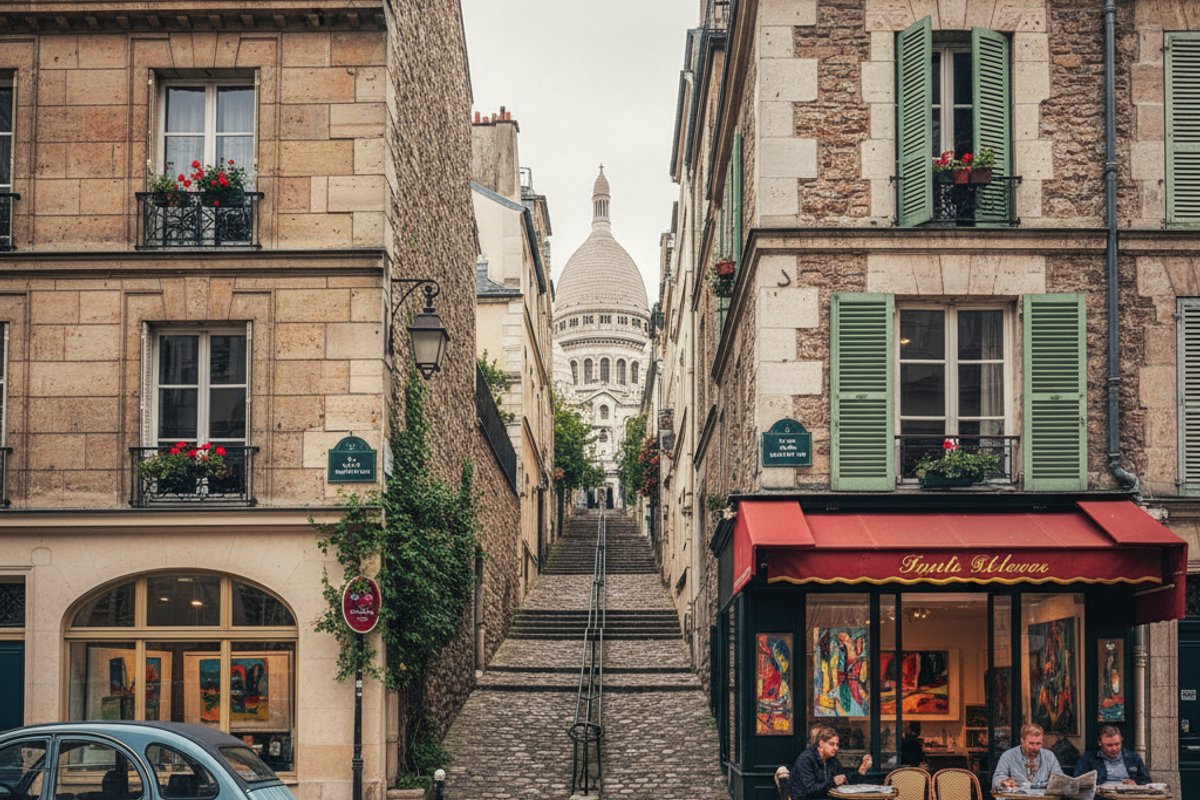
The 7th is grand, quiet, and residential. The Eiffel Tower dominates its western end. The Musee d’Orsay sits on the Seine. Les Invalides, with Napoleon’s tomb, occupies its center. Rue Cler is a tidy pedestrian market street with cheese shops, patisseries, and wine bars that cater to a well-heeled local crowd.
This is not a nightlife area. After 9pm, the streets go quiet. The restaurants tend toward traditional French, and prices reflect the neighborhood: a steak frites on Rue Cler will run 22-28 euros. Hotels here are in the 180-350 euro range, and many have partial Eiffel Tower views that they charge a premium for.
Who it suits: Families, older travelers, anyone who wants to wake up with a view of the tower. People who prefer calm streets over nightlife.
Transit: Metro Lines 8, 13, and RER C (Champ de Mars-Tour Eiffel, Invalides). Line 6 runs elevated along the southern edge with great views.
Price range: Hotels 180-350 euros/night. Restaurants 20-40 euros for a main.
8th Arrondissement: Champs-Elysees and Grand Boulevards
The Champs-Elysees runs from Place de la Concorde to the Arc de Triomphe through the heart of the 8th. It is wide, grand, and lined with flagship stores, cinemas, and chain restaurants. The avenue itself is more spectacle than substance. You walk it once, admire the scale, and then eat somewhere else.
The side streets are another story. Rue du Faubourg Saint-Honore has fashion houses. The area around Parc Monceau is genuinely beautiful and residential. The Grand Palais and Petit Palais face each other near the river.
Eating on the Champs-Elysees is a trap. A basic burger can cost 22-28 euros. Walk two blocks in any direction and prices drop by half. The Publicis Drugstore at the top of the avenue is open late and has a reasonable brasserie.
Who it suits: Luxury shoppers, business travelers, people who want a major landmark address. Not ideal for budget travelers.
Transit: Metro Lines 1, 2, 9, 13. RER A (Charles de Gaulle-Etoile). Extremely well connected.
Price range: Hotels 250-600+ euros/night. Some of the most expensive hotel rooms in Paris are on or near the Champs-Elysees.
“First time in Paris and we chose to stay near Gare de Lyon instead of the center. Best decision we made. Real neighborhood feel, great food, 10-minute metro to the Louvre. Returning visitors told us they wished they had done the same.”
9th and 10th Arrondissements: Canals, Nightlife, and Gritty Charm
The 9th has two faces. Its southern end includes the grand Opera Garnier and the big department stores Galeries Lafayette and Printemps on Boulevard Haussmann. Head north and it becomes the SoPi (South Pigalle) neighborhood, which has transformed over the past decade into one of Paris’s most interesting dining and bar districts. Rue des Martyrs is a great food street: bakeries, fromageries, a good wine bar every 50 meters.
The 10th is built around the Canal Saint-Martin. On warm evenings, locals line the canal banks with wine and cheese for improvised picnics. The area around Rue du Faubourg Saint-Denis has some of the best cheap food in Paris: Indian restaurants, Kurdish kebab shops, African diners, and the Marche Saint-Quentin covered market. Gare du Nord and Gare de l’Est train stations are both here, which means hotels are plentiful and often priced well: 100-180 euros per night for decent mid-range options.
The immediate surroundings of Gare du Nord and Gare de l’Est are not pretty. Some streets feel rough after dark. But the restaurant and bar scene two blocks in any direction makes up for it.
Who it suits: Younger travelers, food lovers, people who want to eat well for less, anyone arriving by Eurostar (Gare du Nord).
Transit: Metro Lines 2, 4, 5, 7. RER B and D at Gare du Nord. Direct Eurostar to London.
Price range: Hotels 100-200 euros/night. Dinner at a Canal Saint-Martin restaurant: 15-25 euros for a main.
11th and 12th Arrondissements: Bastille, Gare de Lyon, and Where the Hotel Is
This is home territory. The 11th and 12th share the Place de la Bastille, the square where the famous prison once stood. Today it is a traffic circle with the July Column in the center and the Opera Bastille on its south side.
The 11th is one of the liveliest parts of Paris for going out. Rue Oberkampf, Rue de Lappe, and Rue de la Roquette have bars and restaurants packed on Thursday through Saturday nights. The food scene ranges from classic bistros to natural wine bars to some of the best ramen in Paris (Kodawari Ramen on Rue Mazarine gets all the press, but Ippudo on Rue Sedaine in the 11th is consistently excellent). Rue de Charonne has independent shops and brunch spots. It is not a major sightseeing district, which keeps prices sane. Hotels run 110-200 euros per night.
The 12th is where Adriatic Hotel sits, near Gare de Lyon. It is a quieter, more residential arrondissement. The main draws: the Coulée Verte René-Dumont (an elevated park built on a disused railway line, which inspired New York’s High Line), the Promenade Plantee running east from Bastille, the Viaduc des Arts underneath it (workshops and galleries in the old railway arches), and the enormous Bois de Vincennes on the eastern edge. Bercy Village, a former wine warehouse district along the Seine, has been converted into shops, restaurants, and a multiplex cinema. AccorHotels Arena (Bercy) hosts major concerts and events.
The 12th has a genuine neighborhood feel. Markets on Boulevard Daumesnil and Rue d’Aligre (the Marche d’Aligre is open Tuesday through Sunday, one of the cheapest in Paris for produce). Bakeries, tabacs, and cafes used by locals, not tourists. Hotel prices are significantly lower than the central arrondissements: 90-180 euros per night.
From Gare de Lyon, you have Metro Lines 1 and 14, plus RER A and D. That puts you 5 minutes from Chatelet, 15 minutes from Charles de Gaulle-Etoile, 25 minutes from the Eiffel Tower. You are not sacrificing access for affordability. You are just skipping the tourist-inflated prices.
Who it suits: Budget-conscious visitors who still want a real Paris experience. Families. Anyone arriving by TGV at Gare de Lyon (trains from Lyon, Marseille, the Riviera, Switzerland, Italy). People who want to walk to Bastille nightlife but sleep on a quiet street.
Transit: Metro Lines 1, 6, 8, 14. RER A and D at Gare de Lyon. Bus routes throughout. Excellent connections.
Price range: Hotels 90-180 euros/night. Meals 12-22 euros. Coffee 2-3 euros at a local cafe.
13th Arrondissement and Beyond: Chinatown and Southern Paris
The 13th sits south of Gare de Lyon, across the tracks. Its main claim to fame is Paris’s Chinatown, centered on Avenue de Choisy and Avenue d’Ivry. The large Asian supermarkets (Tang Freres on Avenue d’Ivry is the biggest) are worth a visit even if you are not cooking. The food courts inside the shopping centers along Avenue de Choisy serve pho, dim sum, and Cantonese roast duck for 8-12 euros.
The Bibliotheque Nationale de France (BNF) sits on the Seine in the northeastern corner of the 13th. The area around it, sometimes called Paris Rive Gauche, has been heavily redeveloped. Les Docks, a former warehouse turned design center and bar, sits along the river. Street art covers the tower blocks along Boulevard Vincent Auriol. Not a typical tourist area, but interesting if you have explored the center and want something different.
Who it suits: Repeat visitors looking for something outside the guidebooks. Food adventurers. Budget travelers (hotels here run 80-150 euros/night).
Transit: Metro Lines 5, 6, 7, 14. RER C along the river. Tram T3a along the southern edge.
18th Arrondissement: Montmartre
Montmartre is on the hill in the north of Paris, crowned by the white dome of Sacre-Coeur. The view from the basilica steps across the entire city is free and worth the climb. The streets around Place du Tertre are tourist-heavy: portrait artists, overpriced restaurants, souvenir shops. Walk five minutes in any direction and the 18th becomes a real, working neighborhood.
Rue Lepic has good food shops and the Moulin de la Galette, one of the last surviving windmills. Rue Caulaincourt runs along the back of the hill with views and neighborhood cafes. The Marche de la Chapelle along Boulevard de la Chapelle has some of the cheapest produce in Paris.
The area immediately around Barbes-Rochechouart station and the bottom of the hill near Pigalle can feel edgy, especially at night. The higher up the hill you go, the calmer it gets. Some of the small hotels near Abbesses station (Metro Line 12) are genuinely charming and priced around 120-200 euros per night.
Who it suits: Romantics, photographers, people who want the classic Paris postcard experience. Best as a day visit if you are staying elsewhere.
Transit: Metro Lines 2, 4, 12. The funicular to Sacre-Coeur accepts a regular t+ ticket. Line 2 runs along the foot of the hill (Anvers, Barbes-Rochechouart, La Chapelle).
Price range: Hotels 100-220 euros/night. Watch out for tourist-trap restaurants around Place du Tertre (20+ euros for a mediocre croque-monsieur). Eat on Rue Lepic or Rue des Abbesses instead.
Practical Tips for Choosing Your Neighborhood
Prioritize Metro access over proximity to one attraction. You will visit sights all over the city. Being on a direct Metro line to the center is more useful than being two blocks from the Eiffel Tower.
Expect noise near train stations. Hotels around Gare du Nord, Gare de l’Est, and Gare Saint-Lazare are cheap for a reason. The streets can be loud and the immediate area rough around the edges. Gare de Lyon is calmer because the surrounding 12th arrondissement is more residential.
Sunday closures matter. Many shops, bakeries, and restaurants close on Sundays across most of Paris. The Marais (3rd-4th) is the notable exception, staying open all weekend. Rue d’Aligre market in the 12th runs on Sunday mornings.
Avoid the very center for sleeping. The 1st and 2nd arrondissements are dead at night. Few residents, few supermarkets, and restaurants cater to tourists. Stay in a neighborhood where Parisians actually live (11th, 12th, 5th, 9th) and take the Metro in for sightseeing.
Check the arrondissement number. It is the last two digits of the postcode. 75012 means the 12th. 75004 means the 4th. Hotel listings sometimes obscure which neighborhood you are actually in.
Check current prices at SOC ADRIATIC HOTEL TOURISME
SOC ADRIATIC HOTEL TOURISME – a great base for exploring Paris.
Check Available RoomsWe may earn a small commission if you book through this link.
You might also find these useful: Where to Stay in Paris, Gare de Lyon Neighborhood Guide, Is Paris Safe?.
The official Paris tourism board at parisjetaime.com has up-to-date event listings, seasonal guides, and transport information.
“This hotel is a local favorite! The location is unbeatable – just a stone’s throw from the train station.”
See SOC Adriatic Hotel for Yourself
Browse All Photos on Booking.com →
This post contains affiliate links. We may earn a commission at no extra cost to you.
Frequently Asked Questions
See SOC Adriatic Hotel for Yourself


Browse All Photos on Booking.com →
This post contains affiliate links. We may earn a commission at no extra cost to you.
Which Paris arrondissement is best for first-time visitors?
The 4th (Marais) and 5th (Latin Quarter) are the classic first-timer picks because you can walk to many major sights. But they are expensive. The 12th arrondissement near Gare de Lyon offers better value and puts you 5-10 minutes by Metro from the same attractions. The 11th around Bastille is another strong choice with more restaurant options and nightlife.
Is the 12th arrondissement a good area to stay in Paris?
Yes. It is residential, safe, and well connected. Gare de Lyon gives you Metro Lines 1 and 14 plus RER A and D, which reach every major area of the city in under 20 minutes. Bastille is a 12-minute walk. Hotels and restaurants cost significantly less than in the central tourist districts. The Marche d’Aligre market and Bercy Village are both worth exploring.
Which neighborhoods in Paris should I avoid?
No entire arrondissement is off-limits, but some pockets feel uncomfortable after dark. The immediate area around Gare du Nord (10th) and Barbes-Rochechouart (18th) can be rough in the late evening. The northern end of the 19th around Stalingrad station has higher crime rates. Use normal city awareness: stay on well-lit streets, keep your phone in your pocket on the Metro, and avoid obviously sketchy corners.
What is the cheapest area to stay in Paris?
The 10th (near Gare du Nord/Gare de l’Est), 12th (near Gare de Lyon), 13th (Chinatown/BNF area), and 19th (Buttes-Chaumont) tend to have the lowest hotel rates within Paris proper, often 80-150 euros per night. The 12th hits the best balance of price, safety, and transport access.
How do the arrondissement numbers work?
Paris has 20 arrondissements numbered 1 through 20. They spiral clockwise outward from the center, like a snail shell. The 1st is at the very center (Louvre area), and the numbers increase as you move outward. The last two digits of any Paris postcode tell you the arrondissement: 75001 is the 1st, 75012 is the 12th, 75020 is the 20th.
Is Montmartre worth staying in?
Montmartre (18th) is worth visiting for the views, Sacre-Coeur, and the village atmosphere on the hilltop. Staying there can be hit or miss. The area near Abbesses station is charming but hilly. The lower slopes near Pigalle and Barbes are grittier. It is also far from the center of the city. Most visitors are better off doing a half-day trip to Montmartre and staying somewhere with better Metro access.
What is the best neighborhood in Paris for food?
The 11th (Oberkampf, Charonne) has the most interesting and diverse restaurant scene right now. The 10th along Canal Saint-Martin is strong for casual dining and international food. The 5th has classic bistros. The 6th has upscale French dining. For cheap, excellent Asian food, the 13th around Avenue de Choisy is hard to beat. In the 12th, the Marche d’Aligre area and Bercy Village both have solid options.
How long does it take to get from the 12th arrondissement to the Eiffel Tower?
About 25 minutes. Take the RER C from Gare de Lyon directly to Champ de Mars-Tour Eiffel. One train, no changes. Alternatively, Metro Line 1 to Trocadero (with one change) takes about 30 minutes and gives you the classic approach across the Pont d’Iena with the tower in front of you.