Skip to content

TLDR

Paris has 20 arrondissements and each one feels like a different city. Where you stay determines what your trip feels like – the price you pay, how long you spend on the metro, and whether your street is quiet at midnight or full of bars. This guide breaks it down by traveller type: couples, families, budget-focused, luxury, and first-timers. Includes price ranges, transit access, and honest pros and cons for each area. Short version: the 12th arrondissement near Gare de Lyon gives you the best value-to-access ratio in the city.

Where to Stay in Paris: Area Guide for Visitors, Paris
Where to Stay in Paris: Area Guide for Visitors

Insider Tip

Ask at SOC ADRIATIC HOTEL TOURISME for current local recommendations. The staff know what is worth your time right now.

Planning your stay? Check current rates at SOC ADRIATIC HOTEL TOURISME – a convenient base for exploring Paris.

How Paris Is Organised – A Quick Primer

Where to Stay in Paris: Area Guide for Visitors

Paris is divided into 20 numbered districts called arrondissements. They spiral clockwise from the centre, like a snail shell. The 1st arrondissement is the geographic centre (the Louvre is there). The numbers get higher as you move outward.

Lower numbers generally mean more expensive, more touristy, and closer to the big sights. Higher numbers mean lower prices, more residential neighbourhoods, and more time on the metro. But that is a rough rule with plenty of exceptions.

The metro has 16 lines and covers every arrondissement. The longest you will spend on the metro to cross the city is about 35 minutes. From the outer arrondissements (10th through 20th), most central sights are 15-25 minutes by metro. That is roughly the same time it takes to walk from one end of the 1st arrondissement to the other.

So the real question is not “how close am I to the Eiffel Tower?” It is “what kind of neighbourhood do I want to wake up in, and what am I paying for it?”

For Couples – The Marais (3rd and 4th) and Saint-Germain (6th)

Price range: 180-350 euros per night for a decent double room. Boutique hotels in the Marais run 220-400 euros. Saint-Germain skews higher, with most options in the 250-500 euro range.

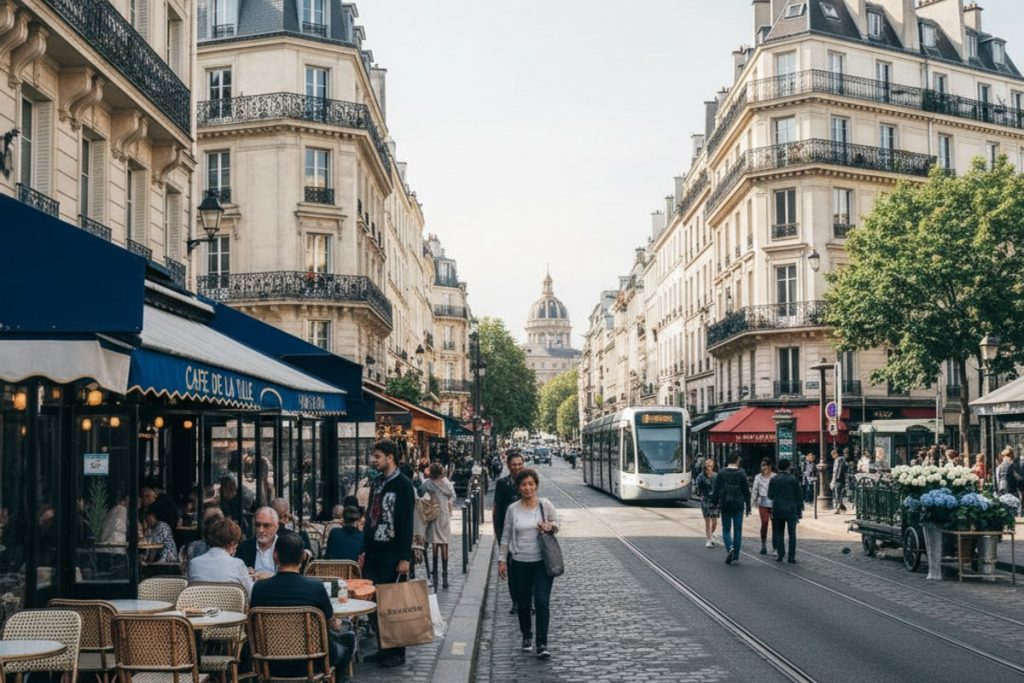
The Marais is the area most visitors fall in love with. Narrow medieval streets, Place des Vosges (the oldest square in Paris), galleries, wine bars, and some of the best food in the city. Rue des Rosiers has the falafel shops. Rue de Bretagne has the Marché des Enfants Rouges. The neighbourhood is walkable, photogenic, and alive at all hours without being rowdy.

Metro access is excellent: Line 1 (Saint-Paul, Hôtel de Ville), Line 8 (Filles du Calvaire), and Line 11 (Rambuteau). You can walk to Notre-Dame in 10 minutes and to the Louvre in 15.

The catch: Hotels in the Marais are often in old buildings, which means small rooms and no lifts. Check the room size before booking – anything under 14 square metres will feel tight with two suitcases. Street noise can carry in summer when you want the windows open.

Saint-Germain-des-Prés is the literary Left Bank. Café de Flore, Les Deux Magots, the Jardin du Luxembourg. The streets are quieter and more polished than the Marais. Good restaurants on every block – Rue de Buci and Rue de Seine have market stalls during the day and excellent bistros at night.

Metro Line 4 (Saint-Germain-des-Prés, Odéon) and RER B (Luxembourg) provide access. The Musée d’Orsay is a 10-minute walk.

The catch: This is one of the most expensive neighbourhoods in Paris. Even budget hotels here cost over 200 euros per night. Restaurants along the main boulevard are pricey (expect 30-50 euros per person for dinner). The neighbourhood is also quieter at night, which is either a pro or a con depending on what you want.

Where to Stay in Paris: Area Guide for Visitors view
Where to Stay in Paris: Area Guide for Visitors scene

For Families – The 12th (Gare de Lyon) and the 15th

Where to Stay in Paris: Area Guide for Visitors

Price range: 100-200 euros per night. Family rooms and connecting rooms are easier to find in these areas than in the central arrondissements, where hotels tend to have smaller footprints.

The 12th arrondissement near Gare de Lyon is where we are, and we are biased, but here is the honest case for it.

The Coulée Verte – an elevated walkway built on an old railway viaduct – starts a 10-minute walk from the hotel. Kids enjoy the raised perspective and the tunnels. The Bois de Vincennes is at the far end, with rowing boats on the lake (14 euros per hour), a zoo (22 euros for adults, 16.50 for children 3-12), and wide open lawns for running around.

The Jardin des Plantes is a 20-minute walk or one RER C stop away. The natural history museum’s Grande Galerie de l’Évolution (10 euros) has a parade of life-size taxidermy animals that children remember for years. The menagerie (small zoo) inside the garden is 13 euros for adults.

The neighbourhood has supermarkets (Franprix on Rue de Lyon, Monoprix near Bastille) where you can stock up on breakfast supplies and snacks – helpful when you are feeding a family and want to avoid 15-euro hotel breakfasts. Restaurants along Rue de Bercy and around the Bercy Village complex are moderately priced, with mains from 14-22 euros.

Transit is the real strength. Gare de Lyon is a major hub: Metro Lines 1 and 14, RER A and D. Line 1 takes you to the Champs-Élysées in 15 minutes. Line 14 runs to Saint-Lazare in 12 minutes. RER A goes to Disneyland Paris in 35 minutes (no changes). RER D goes to the Stade de France. You do not waste your mornings getting across town.

The catch: The area immediately around Gare de Lyon itself (the station concourse) is functional, not charming. You need to walk 5-10 minutes in any direction to reach the pleasant residential streets. The 12th is also not where the nightlife is – if you want bars and clubs, you will need to go to Bastille or the Marais (both within 15 minutes).

The 15th arrondissement is another family-friendly option. It is the most populated arrondissement in Paris and feels genuinely local. The Parc André Citroën has a tethered hot air balloon (14 euros for adults, 7 for children) with panoramic views. Rue du Commerce is a high-street shopping strip with everything you need.

Hotels here run 90-170 euros per night. Metro Line 6 (elevated, with Eiffel Tower views from Bir-Hakeim), Line 8, Line 10, and Line 12 all serve the area. It is about 20 minutes to the Louvre by metro.

The catch: It is not pretty. The 15th is mostly postwar apartment blocks and busy roads. You are staying for practicality and price, not atmosphere. If that trade-off works for you, it is a solid choice.

⭐⭐⭐⭐⭐
“The 12th arrondissement was a happy accident for us. We booked it because it was affordable and ended up loving the neighborhood. Local markets, easy walk to Bastille, and none of the tourist markup. We would stay here again over the more central areas.”
– Visitor review, Paris via TripAdvisor See more reviews on Google

For Budget Travellers – The 10th, 11th, and 12th

Price range: 70-150 euros per night. Hostels and basic hotels start around 40-60 euros for a private room.

The 10th arrondissement (Canal Saint-Martin, Gare du Nord, Gare de l’Est) has some of the cheapest hotels in central Paris. The canal area is genuinely enjoyable – iron footbridges, independent cafés, and a young, international crowd. Rue du Faubourg Saint-Denis has excellent, cheap food from every continent: Indian, Kurdish, Turkish, Sri Lankan, African. A filling meal costs 8-12 euros.

Metro Lines 4, 5, and 7 serve the area well. Gare du Nord connects to the RER B for CDG airport and the Eurostar for London.

The catch: The area immediately around Gare du Nord and Gare de l’Est is rough around the edges, especially at night. It is not unsafe, but it is loud, crowded, and not particularly welcoming after dark. Stay east of the canal (toward Rue Bichat and Rue de Marseille) for a quieter experience. The stretch of Boulevard de Magenta between the two stations is the least pleasant part.

The 11th arrondissement (Oberkampf, Rue de la Roquette, Charonne) is where young Parisians actually go out. The bar and restaurant scene along Rue Oberkampf and Rue Jean-Pierre Timbaud is one of the liveliest in the city. A glass of wine costs 4-6 euros. A bistro dinner runs 15-25 euros. The neighbourhood is safe, walkable, and full of character.

Hotels in the 11th typically cost 90-150 euros per night. Metro Line 2 (Ménilmontant), Line 3 (Parmentier), Line 5 (Oberkampf), and Line 9 (Voltaire) all pass through. Bastille is at the southern edge, connecting you to Lines 1, 5, and 8.

The catch: It gets noisy at night, especially on weekends around Rue Oberkampf and Rue de Lappe. If you are a light sleeper, ask for a courtyard-facing room. The architecture is less photogenic than the Marais or Saint-Germain – this is a working neighbourhood, not a postcard.

The 12th arrondissement (again) works well for budget travellers for the same reasons it works for families: lower hotel prices, strong transit connections, and access to affordable food markets like the Marché d’Aligre on Rue d’Aligre (open every morning except Monday). The 12th is quieter than the 10th and 11th, which is either a pro or a con depending on your priorities.

For Luxury – The 8th, 1st, and 6th

Price range: 400-1,500+ euros per night. Palace hotels start at 800 euros. Five-star boutiques run 400-700 euros.

The 8th arrondissement (Champs-Élysées, Faubourg Saint-Honoré) is where the grand palace hotels are: the Plaza Athénée, the Bristol, the Crillon. The avenue itself is more about spectacle than substance, but the side streets – Avenue Montaigne, Rue du Faubourg Saint-Honoré – have the flagship stores for every luxury fashion house in existence. The Grand Palais and Petit Palais are here, and the Musée Jacquemart-André (14 euros) on Boulevard Haussmann is one of the most underrated museums in Paris.

Metro Lines 1, 9, and 13 serve the area. RER A stops at Charles de Gaulle-Étoile.

The catch: The Champs-Élysées is a tourist strip. Prices at every café and restaurant within sight of the avenue are inflated by 30-50 percent compared to the rest of Paris. The area empties out at night – it is a daytime and shopping district, not a neighbourhood where people live.

The 1st arrondissement (Louvre, Tuileries, Palais Royal) puts you at the exact centre of the city. You can walk to almost everything. The Jardin des Tuileries and the Palais Royal gardens are your backyard. Rue de Rivoli has the retail chains; the streets behind it (Rue Saint-Honoré, Rue de l’Arbre Sec) have the independent shops and restaurants.

Hotels range from 300 euros for a good four-star to over 1,000 euros for the top establishments. The Ritz is on Place Vendôme. The Meurice overlooks the Tuileries.

The catch: You are surrounded by tourists at all times. The streets around the Louvre are packed from 10:00 to 18:00. Finding a quiet, well-priced restaurant for dinner requires walking a few blocks north toward the 2nd arrondissement. Room sizes are small for the price.

The 6th arrondissement (Saint-Germain, Luxembourg) has already been covered in the couples section, but it deserves a mention in the luxury category too. Hotels like L’Hôtel (where Oscar Wilde died) and the Relais Christine offer an intimate, literary version of luxury that is different from the corporate grandeur of the 8th. Prices start around 350 euros and go up from there.

For First-Timers – The Central 1st Through 6th

If this is your first time in Paris, staying in the 1st through 6th arrondissements means you can walk to most major sights. That matters more than you think. After a long flight, being able to stroll to the Seine in five minutes instead of navigating the metro is worth something.

The 4th and 5th are the sweet spot for first-timers who want a central location without the full luxury price tag. The 4th includes the Marais and Île de la Cité. The 5th (Latin Quarter) has the Panthéon, the Jardin des Plantes, and the narrow streets around Rue Mouffetard – one of the oldest market streets in Paris, with bakeries, cheese shops, and crêpe stands. Hotels in the 5th run 130-250 euros per night, which is reasonable for central Paris.

Metro Lines 4, 7, and 10 serve the 5th. RER B stops at Luxembourg and Saint-Michel. You can walk to Notre-Dame from most hotels in under 10 minutes.

The trade-off with any central arrondissement: you will pay more for a smaller room than you would in the outer districts. A 15-square-metre room in the 5th costs what a 22-square-metre room costs in the 12th. You are paying for location, not space.

An honest suggestion for first-timers on a moderate budget: stay in the 12th near Gare de Lyon and use the money you save on hotels to eat better, see more, and take the occasional taxi home at night. Metro Line 1 from Gare de Lyon puts you at the Louvre in 10 minutes and at the Champs-Élysées in 15. You are not far from anything. You are just paying less to sleep.

Areas to Avoid (and Why)

No area in Paris is outright dangerous for tourists, but some offer a worse experience for the price.

Directly around Gare du Nord (10th). The cheapest hotels in Paris cluster here. There is a reason for the price. The immediate station area is noisy, crowded, and not pleasant after dark. If you stay in the 10th, pick a hotel east of Canal Saint-Martin instead.

The 13th arrondissement (Porte d’Italie end). Far from most sights, limited nightlife, and the architecture is mostly 1960s tower blocks. There is great Chinese and Vietnamese food on Avenue de Choisy, but that alone does not justify the commute.

La Défense. Technically outside Paris. It is the business district – glass towers, conference hotels, and chain restaurants. There is nothing to walk to in the evening, and you are 25 minutes from central Paris by RER A. Unless you have meetings there, skip it.

The outer 18th (beyond Montmartre, toward Porte de Clignancourt). Prices are low, but the commute to the centre adds up in time and metro fares. The Sacré-Coeur side of the 18th is fine. The area north of it becomes less visitor-friendly.

Quick Comparison Table

1st arrondissement: Central, walkable, expensive. 300-1,000+ euros/night. Best for: luxury, first-timers with budget.

3rd/4th (Marais): Charming, great food, central. 180-400 euros/night. Best for: couples, culture-focused travellers.

5th (Latin Quarter): Historic, moderate prices, walkable. 130-250 euros/night. Best for: first-timers, students, solo travellers.

6th (Saint-Germain): Elegant, literary, quiet evenings. 250-500 euros/night. Best for: couples, luxury on the Left Bank.

8th (Champs-Élysées): Grand, touristic, shopping-focused. 400-1,500 euros/night. Best for: luxury, shopping trips.

10th (Canal Saint-Martin): Cheap, diverse, young. 70-130 euros/night. Best for: budget travellers who want nightlife.

11th (Oberkampf/Bastille): Lively, affordable, bar scene. 90-150 euros/night. Best for: budget travellers, nightlife-focused.

12th (Gare de Lyon): Practical, well-connected, great value. 100-200 euros/night. Best for: families, budget travellers, transit-focused trips.

15th (Vaugirard): Local, family-friendly, no frills. 90-170 euros/night. Best for: families, long stays, budget.

Check current prices at SOC ADRIATIC HOTEL TOURISME

SOC ADRIATIC HOTEL TOURISME – a great base for exploring Paris.

Check Available Rooms

We may earn a small commission if you book through this link.

See SOC Adriatic Hotel for Yourself

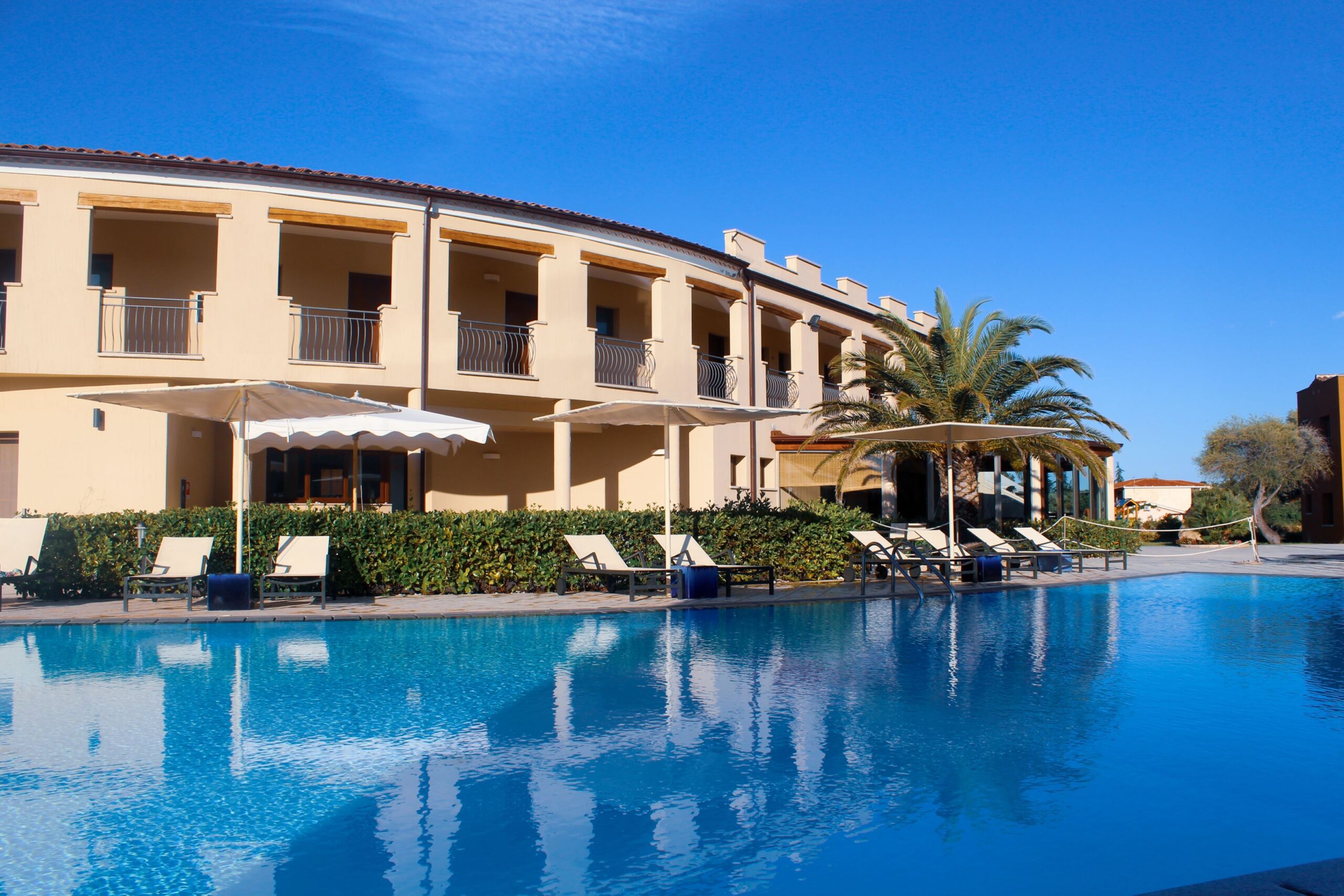
SOC Adriatic Hotel room SOC Adriatic Hotel room SOC Adriatic Hotel room

Browse All Photos on Booking.com →

This post contains affiliate links. We may earn a commission at no extra cost to you.

Frequently Asked Questions

What is the best arrondissement to stay in Paris?

There is no single best. The Marais (3rd/4th) is the most popular with visitors for its atmosphere and food. The 12th near Gare de Lyon offers the best value with strong metro and RER connections. The 6th (Saint-Germain) is the most elegant. It depends on your budget and priorities – this guide has a section for each traveller type.

How much should I budget per night for a Paris hotel?

Budget: 70-130 euros for a clean, basic hotel in the 10th, 11th, or 12th. Mid-range: 150-250 euros for a comfortable hotel in the Marais, Latin Quarter, or a good three-star in a central location. Luxury: 400-800 euros and up for four- and five-star hotels in the 1st, 6th, or 8th. Prices spike during Fashion Week (late September, early March) and major trade fairs.

Is the 12th arrondissement safe?

Yes. The 12th is a residential arrondissement with families, local shops, and quiet streets. It is one of the safer areas in Paris. The main station area (Gare de Lyon concourse) has the usual big-station bustle, but the surrounding streets are calm at all hours. Standard city awareness applies everywhere – watch your belongings on the metro and in crowded areas.

Should I stay near a train station in Paris?

Staying near a major station gives you excellent transit access, but the quality depends on the station. Gare de Lyon (12th) and Gare Montparnasse (15th) have pleasant surrounding neighbourhoods. Gare du Nord and Gare de l’Est (10th) have cheaper hotels but a rougher immediate area. Gare Saint-Lazare (8th) is central and fine. The station itself matters less than the streets around it.

How far is the 12th arrondissement from the main Paris attractions?

From Gare de Lyon: the Louvre is 10 minutes by Metro Line 1. The Champs-Élysées is 15 minutes on Line 1. Notre-Dame is a 20-minute walk along the Seine or 10 minutes on the RER C. The Eiffel Tower is 25 minutes by metro (Line 6 from Bastille to Bir-Hakeim). Montmartre is 25-30 minutes by metro. Disneyland Paris is 35 minutes on RER A with no changes.

Is it better to stay on the Left Bank or the Right Bank?

The Left Bank (south of the Seine: 5th, 6th, 7th, 13th, 14th, 15th) is generally quieter, more intellectual, and more residential. The Right Bank (north: 1st through 4th, 8th through 12th, 16th through 20th) has more variety, from the luxury of the 8th to the nightlife of the 11th to the practical value of the 12th. Most first-time visitors prefer the Right Bank for its energy and proximity to major sights.

When are Paris hotel prices lowest?

January through mid-March (excluding Fashion Week) and November are the cheapest months. You can find mid-range rooms in the 12th for 80-120 euros per night and decent rooms in the Marais for 150-180 euros. Summer (July-August) and autumn (September-October) are the most expensive. December is mid-range due to holiday tourism but not as high as peak summer.

Can I get from Gare de Lyon to CDG Airport easily?

Yes. Take RER A from Gare de Lyon to Châtelet-Les Halles (2 minutes), then change to RER B toward CDG Airport (about 28 minutes). Total journey is around 45 minutes and costs about 11.45 euros. Alternatively, a taxi costs 53 euros (flat rate from the Right Bank to CDG, set by law). The Navigo Découverte weekly pass (30.75 euros) includes the RER B to CDG if you are using it all week anyway.

You might also find these useful: Paris Neighborhood Guide, Gare de Lyon Neighborhood Guide, Is Paris Safe?.

The official Paris tourism board at parisjetaime.com has up-to-date event listings, seasonal guides, and transport information.

What Guests Say About SOC ADRIATIC HOTEL TOURISME
“Everything was great, it had very good wifi, no complains at all. The buffet breakfast was delicious.”
⭐ John – 9/10 on Booking.com Read Guest Reviews

Leave a Reply

Your email address will not be published. Required fields are marked *