
TLDR
Five self-guided walking routes that cover the best of Paris on foot. Each one includes a start and end point, distance, estimated time, key stops, and the best time of day to go. One route starts right at the hotel near Gare de Lyon. No guide fees, no group schedules, just you and a good pair of shoes. Total walking across all five routes: about 22 kilometres.

Insider Tip
Ask at Adriatic Paris Hotel for current local recommendations. The staff know what is worth your time right now.
Planning your stay? Check current rates at Adriatic Paris Hotel, a convenient base for exploring Paris.
Before You Start, Practical Walking Tips
Paris is a flat city. Outside of Montmartre and Belleville, you will rarely encounter a serious hill. The streets are cobblestone in older areas, so cushioned shoes with decent grip are worth it. Trainers or broken-in walking shoes are fine. Sandals are not.
Carry a water bottle. Public drinking fountains (Wallace fountains, the dark green cast-iron ones) are everywhere. They run clean city water, free, and they are marked on the official Paris eau de Paris map if you want to look them up.
A single metro ticket (t+) costs about 2.15 euros. If you run out of energy on any of these routes, the metro is never more than a few hundred metres away. Download the RATP app or Citymapper before you go, both show real-time metro and bus connections and work offline for maps.
Public toilets: the grey Sanisette booths on the pavement are free and self-cleaning. Cafés will let you use the toilet if you buy a coffee (1.50-2.50 euros at the counter). Department stores (Galeries Lafayette, BHV Marais) have clean, free toilets on upper floors.
Route 1: Bastille to Bois de Vincennes via the Coulée Verte
Distance: 4.7 km one way. Time: 1.5 to 2 hours (one way, with stops). Best time: Morning, especially weekdays. Start: Viaduc des Arts, Avenue Daumesnil (10-minute walk from the hotel).
This is the route you can do straight out of the hotel door, and it is one of the most unusual walks in the city.
Walk west from Gare de Lyon along Rue de Lyon to the Place de la Bastille. The Colonne de Juillet (the bronze column in the centre) marks the site of the Bastille fortress. It commemorates the 1830 revolution, not the more famous 1789 one. The gold figure on top is the Génie de la Liberté.
From Bastille, head east along Avenue Daumesnil. After about 300 metres you will see the red-brick arches of the Viaduc des Arts. These are the ground-floor workshops: furniture restorers, luthiers, jewellers, textile artists. Pop your head into a few. They are open to visitors and there is no pressure to buy.
The stairs up to the Coulée Verte (also called the Promenade Plantée) are on the left side of Avenue Daumesnil, near the intersection with Rue de Rambouillet. Once you are up, you are walking on top of the old Vincennes railway line, surrounded by roses, bamboo, lavender, and lime trees. The path is paved and flat. Benches appear every 50 metres or so.
The elevated section runs for about 1.5 kilometres before descending to a planted trench at the level of the old railway cutting. After Jardin de Reuilly (a good spot to rest, there are lawns and a curved footbridge), the path continues at ground level through tunnels and tree-lined corridors all the way to the Bois de Vincennes.
At the Bois de Vincennes, you can circle Lac Daumesnil (1.5 km loop, flat, about 25 minutes) or rent a rowing boat for around 14 euros per hour. To return, take Metro Line 8 from Porte Dorée back to Bastille (two stops).


Route 2: The Marais, Place des Vosges to Centre Pompidou
Distance: 3 km. Time: 2 to 3 hours (with stops for food and browsing). Best time: Late morning, any day except Tuesday (some museums closed). Start: Metro Line 1 from Gare de Lyon to Saint-Paul (3 stops).
Exit Saint-Paul station and walk east on Rue Saint-Antoine for 200 metres. Turn left on Rue de Birague. The archway at the end leads into Place des Vosges.
Place des Vosges is the oldest planned square in Paris, completed in 1612 under Henri IV. The symmetry is striking: 36 houses, all built to the same design, with ground-floor arcades. Sit in the garden in the centre. Victor Hugo’s apartment is at number 6 on the southeast corner (free entry, closed Mondays).
Leave the square through the northwest corner and walk along Rue des Francs-Bourgeois. This is one of the main shopping streets in the Marais: a mix of French fashion labels (Sandro, Maje, Comptoir des Cotonniers) and independent boutiques. The Musée Carnavalet is on your left at number 23 Rue de Sévigné, the museum of Paris history, housed in two connected Renaissance mansions. Free entry. Allow 45 minutes for a quick tour.
Continue west and turn right on Rue des Rosiers. This is the heart of the old Jewish quarter. L’As du Fallafel at number 34 has had a queue out the door for decades. A pitta loaded with falafel, aubergine, hummus, and cabbage costs about 8 euros. If the queue is too long, Mi-Va-Mi across the street is nearly as good with a shorter wait.
From Rue des Rosiers, wind north through Rue Vieille du Temple. Galleries, coffee shops, and bars line both sides. Turn left on Rue de Bretagne to reach the Marché des Enfants Rouges, Paris’s oldest covered market (since 1615). Japanese bento, Moroccan tagine, Italian pasta, French rotisserie. Plates run 9-14 euros. Grab a seat at the communal tables.
Head south from the market down Rue de Turenne, then cut west on Rue Rambuteau to the Centre Pompidou. The building itself, with its guts turned inside-out (colour-coded pipes, escalators in clear tubes on the facade), is worth seeing even if you do not go in. The permanent collection (modern and contemporary art) costs 15 euros. The view from the top floor is excellent. The sloping plaza in front is always full of street performers.
What Guests Say About Staying in Paris
Guests rate it 8.7/10 on Booking.com from 4569 reviews.
Spacious room, rare for the city. Great location near public transportation. Friendly and helpful staff.
Route 3: Montmartre Loop, Sacré-Coeur to the Moulin Rouge Area
Distance: 3.5 km. Time: 2 to 2.5 hours. Best time: Early morning (before 09:30) to beat the crowds at Sacré-Coeur, or late afternoon for the golden light. Start: Metro Line 4 from Gare de Lyon (change at Châtelet) to Barbès-Rochechouart, or Metro Line 2 to Anvers.
From Anvers station, you are facing the hill. Ignore the funicular queue and take the stairs up Rue Foyatier on the left side. It is 222 steps. The stairway itself is charming: lampposts, greenery, and each landing gives you a wider view of the city.
At the top, Sacré-Coeur is free to enter. The interior is Byzantine-style with a massive gold mosaic of Christ above the altar. The dome climb costs 7 euros and adds 300 more steps, but the 360-degree view from the top is the best in Paris, you can see for 30 kilometres on a clear day.
Come out of the basilica and walk behind it into the quieter streets. Rue Cortot has the Musée de Montmartre (14 euros), set in a 17th-century house where Renoir had a studio. The garden behind is a recreation of the one he painted. Across the street, the last working vineyard in Paris, the Clos Montmartre, produces about 500 bottles of wine per year, auctioned off at the Fête des Vendanges every October.
Walk south to Place du Tertre. This is the famous artist square, and yes, it is touristy. Portrait artists will offer to sketch you for 30-50 euros. It is fun to watch even if you do not sit for one. Have a coffee at one of the terraces (4-6 euros) and people-watch for a few minutes before moving on.
Continue south and west along Rue Lepic. At number 15, you pass Le Café des Deux Moulins, where Amélie was filmed. It is a working café, an espresso at the bar costs about 2.50 euros. Further down Rue Lepic at number 54, Van Gogh lived with his brother Theo in 1886. A small plaque marks the spot.
Rue Lepic curves down toward Boulevard de Clichy. You will pass the Moulin de la Galette (one of the last two windmills in Montmartre) and eventually reach the Moulin Rouge at 82 Boulevard de Clichy. The building is most photogenic at night when the red neon is lit, but it is worth seeing the facade any time. Dinner-and-show packages start around 195 euros. The show-only option is around 90 euros.
From here, take Metro Line 2 at Blanche station back to Nation (direct line), then walk 10 minutes to the hotel.
Route 4: Seine Left Bank, Saint-Germain to Jardin du Luxembourg
Distance: 4 km. Time: 2.5 to 3 hours. Best time: Afternoon, when the café terraces are in full swing. Start: RER C from Gare de Lyon to Saint-Michel Notre-Dame (2 stops, about 8 minutes).
Exit Saint-Michel station on the Left Bank side. Walk south along Boulevard Saint-Michel for one block, then turn right on Rue de la Huchette. This tiny street has been around since the 1200s. Le Caveau de la Huchette at number 5 is a jazz club in a medieval cellar, it has hosted live jazz every night since 1946. Good to note for the evening.
Double back to Boulevard Saint-Germain and head west. You will pass the Église Saint-Séverin (beautiful flamboyant Gothic, free to enter) and the bookshops along Rue de la Parcheminerie. Shakespeare and Company at 37 Rue de la Bûcherie is on a side street to the north, worth a five-minute detour. The original was a hangout for Hemingway and Joyce. The current shop, opened in 1951, keeps the same spirit. There is a small café attached with a view of Notre-Dame across the river.
Continue west on Boulevard Saint-Germain until you reach the Carrefour de l’Odéon. Turn left (south) on Rue de l’Odéon. The Théâtre de l’Odéon at the end is one of France’s six national theatres. Sylvia Beach’s original Shakespeare and Company was at number 12 on this street, where she first published James Joyce’s Ulysses in 1922.
Loop back to Boulevard Saint-Germain and continue west to the church of Saint-Germain-des-Prés, the oldest church in Paris, with parts dating to the 6th century. Free entry. Across the boulevard, Café de Flore and Les Deux Magots face each other. Both are famous, both are expensive (7 euros for a coffee), and both are worth sitting at once if you want to soak in the literary history. Sartre and de Beauvoir held court at Flore. Pick either one.
From Saint-Germain-des-Prés, walk south on Rue Bonaparte for 400 metres. This brings you to the Jardin du Luxembourg. Enter through the northern gate. The park is 25 hectares of formal gardens, chestnut trees, fountains, and green metal chairs that you can drag anywhere you like. Find the Medici Fountain on the east side, a long, narrow reflecting pool flanked by plane trees. It is one of the most peaceful spots in central Paris.
If you have children, the western side of the park has a playground (3.50 euros entry), a puppet theatre (Théâtre du Luxembourg, shows at 15:15 on weekends, 5 euros), and a pond where you can rent small wooden sailboats (5 euros for 30 minutes).
Exit the park on the south side at Rue Auguste Comte. RER B from Luxembourg station takes you back to Châtelet, where you change to the RER A or Metro Line 1 or 14 for Gare de Lyon.
Route 5: Île de la Cité and Île Saint-Louis
Distance: 3 km. Time: 1.5 to 2.5 hours. Best time: Late morning or early evening. Start: Metro Line 4 to Cité, or RER C to Saint-Michel and walk across the bridge.
Île de la Cité is where Paris began. The Celtic Parisii tribe settled here around 250 BC. Two thousand years later, it is still the geographic and symbolic heart of the city.
Start at the western tip, at the Place Dauphine. This triangular square was built by Henri IV in 1607 and feels completely separate from the rest of Paris: quiet, leafy, with restaurant terraces tucked under the trees. Walk east through the square and you reach the Conciergerie (11.50 euros), the medieval palace-turned-prison where Marie Antoinette was held before her execution. The Gothic halls inside are enormous.
Next door is Sainte-Chapelle (11.50 euros, or free with the Museum Pass). Built in 1248 to house relics from the Crusades, the upper chapel has 15 stained glass windows that rise 15 metres from floor to ceiling. When the sun hits them, the entire room turns into colour. Go on a sunny afternoon for the full effect.
Walk east to Notre-Dame. The cathedral is free to enter with a timed reservation (book at notredamedeparis.fr). Even from outside, the restored facade and flying buttresses are worth spending ten minutes with. Walk around the south side along the park at Square Jean XXIII for the best view of the buttresses.
Cross the Pont Saint-Louis footbridge (there is usually a busker or accordion player here) onto Île Saint-Louis. This small island has been residential since the 1600s, and it feels like a village inside a city. The main street, Rue Saint-Louis en l’Île, runs the length of the island.
At number 31, Berthillon has served ice cream since 1954. The queue tells you which shop it is. A single scoop costs 3.50 euros, a double 5.50. The salted caramel and wild strawberry flavours are the ones locals order. If the Berthillon queue is too long, several other shops on the same street sell Berthillon ice cream with a shorter wait.
Walk to the eastern tip of Île Saint-Louis and sit on the stone quay at the Square Barye. The view upriver toward the Pont de Sully and the Left Bank is one of the quietest river views in the city. From here, you are a 20-minute walk back to the hotel along the Right Bank quays via Pont de Sully and Quai Henri IV.
Planning Your Walking Days
You do not need to do all five routes. Pick two or three based on your interests and the weather.
If you only have one day for walking, do Route 2 (the Marais) in the morning and Route 5 (the islands) in the afternoon. They connect naturally, the Marais is just across the river from Île Saint-Louis. Combined, that is about 6 kilometres and five to six hours with lunch and stops.
If you want a quiet morning before the city wakes up, do Route 1 (the Coulée Verte) starting at 08:00. You will have the elevated walkway almost to yourself.
Montmartre (Route 3) is best done on a dry day, the steps get slippery when wet. Do it early in the morning or late afternoon to avoid the midday crush around Sacré-Coeur.
The Left Bank route (Route 4) is the most relaxed. It works well on a weekend afternoon when the terraces are full and the Jardin du Luxembourg is at its best.
All routes end near a metro station, so you can get back to the hotel in 15-25 minutes from any endpoint.
Check current prices at Adriatic Paris Hotel
Adriatic Paris Hotel, a great base for exploring Paris.
Check Available RoomsWe may earn a small commission if you book through this link.
Frequently Asked Questions
Can you walk everywhere in Paris?
Paris is about 10 kilometres across at its widest, so you can technically walk from one side to the other in under two hours. In practice, most visitors walk 10-15 kilometres per day without realising it. The central arrondissements (1st through 6th) are all within walking distance of each other. For longer distances, combine walking with the metro, stations are never more than 500 metres apart in central Paris.
Are self-guided walking tours as good as guided ones?
It depends on what you want. A guided tour gives you historical context and stories you would not find on your own, good guides charge 25-50 euros per person for a two-hour tour. A self-guided walk gives you complete freedom to stop, eat, sit, and change direction. You can spend 30 minutes in a shop or skip a stop entirely. For most visitors, self-guided is more flexible and much cheaper.
What shoes should you wear for walking in Paris?
Cushioned trainers or broken-in walking shoes. Many streets are cobblestone, especially in the Marais, Montmartre, and on the islands. Flat shoes with no grip will make you miserable by noon. Avoid new shoes, break them in before your trip. In summer, breathable trail shoes work well. In winter, waterproof boots with grip are worth the bulk.
Is Montmartre hard to walk?
The climb up to Sacré-Coeur is steep, about 222 steps if you take the Rue Foyatier stairs. Once you are at the top, the area behind the basilica is mostly flat. If the stairs are a problem, you can take the funicular (one metro ticket, about 2.15 euros) or Metro Line 12 to Abbesses and use the lift in the station, which puts you partway up the hill.
How do you get back to Gare de Lyon from these routes?
Every route ends near a metro station. From the Marais, take Metro Line 1 from Saint-Paul (3 stops). From Montmartre, take Line 2 from Blanche to Nation, then walk or take Line 6. From Saint-Germain, take RER B from Luxembourg to Châtelet, then RER A or Metro Line 1/14 to Gare de Lyon. From the islands, walk east along the river, it is about 20 minutes on foot.
How many kilometres does the average tourist walk per day in Paris?
Between 10 and 18 kilometres, depending on how sightseeing-heavy your day is. A single route from this guide is 3-5 kilometres, but add in walking to and from metro stations, exploring shops, and detours for food, and you will easily hit 12-15 kilometres. Track it on your phone if you are curious, most visitors are surprised.
Is it safe to walk in Paris at night?
The routes in this guide pass through safe areas. The Marais, Saint-Germain, the islands, and the 12th arrondissement are all fine after dark. Montmartre is safe around Sacré-Coeur and Place du Tertre but the area around Pigalle and Boulevard de Clichy is seedier at night, not dangerous, but louder and more chaotic. Standard precautions: keep your phone in your pocket on the metro, stay on well-lit streets, and be aware of your surroundings.
What is the best free walking route in Paris?
The Seine riverbank walk from Pont d’Austerlitz to the Eiffel Tower is completely free, runs about 6 kilometres, and passes Notre-Dame, the Louvre, the Musée d’Orsay, and the Pont Alexandre III. The Coulée Verte (Route 1 in this guide) is another strong option: free, elevated, and almost unknown to tourists. Both are best in the late afternoon when the light is warm.
You might also find these useful: Montmartre and Sacre-Coeur Guide, Paris Neighborhood Guide, Things to Do in Paris.
The official Paris tourism board at parisjetaime.com has up-to-date event listings, seasonal guides, and transport information.
See What Hotel Adriatic Looks Like
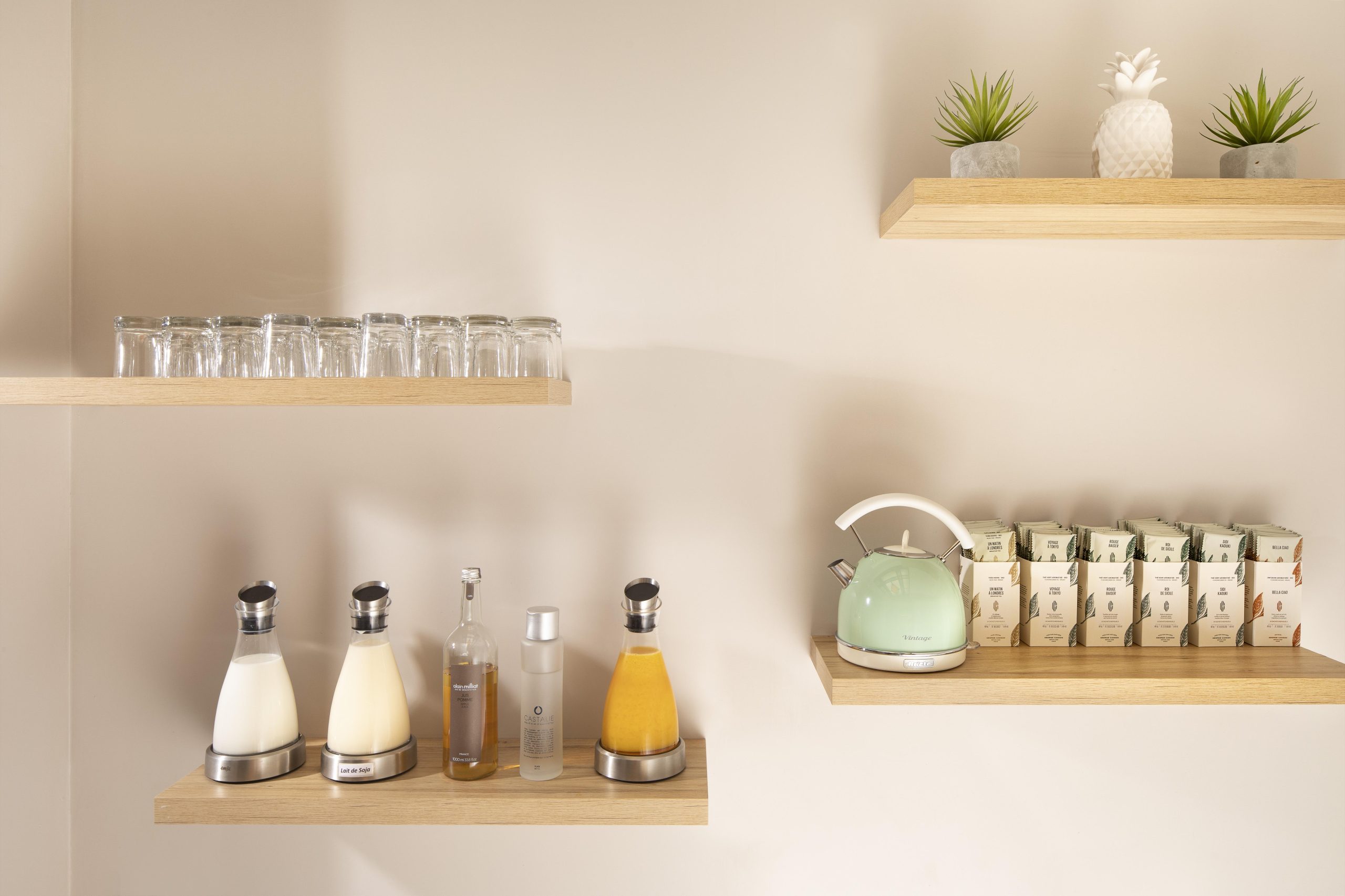

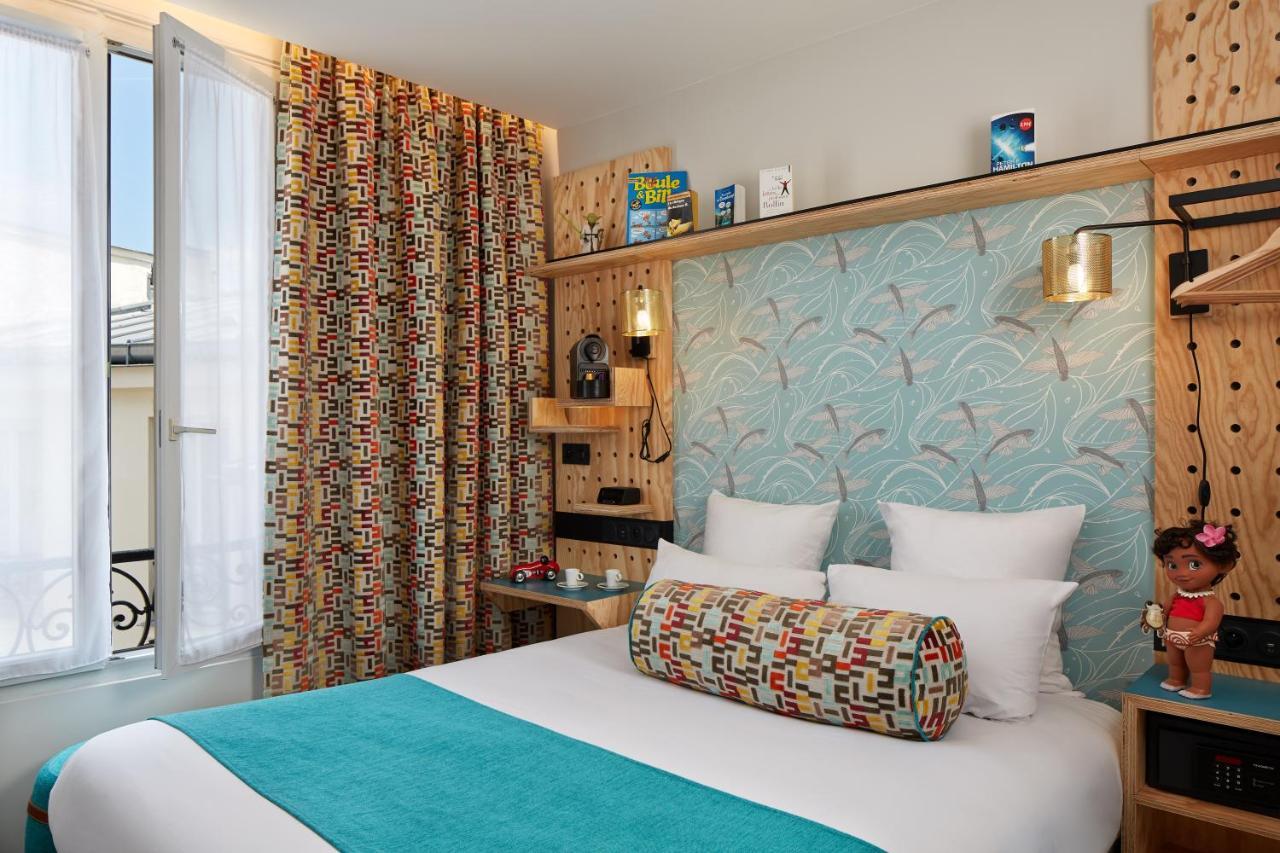
“Stylish, fairly clean place and very practical area. Bright and brand-new units with a comfortable bed.”
Planning a Stay in Paris?
Guests rate Adriatic Paris Hotel 8.7/10 on Booking.com from 4569 reviews. Check prices and availability for Adriatic Paris Hotel on Booking.com, or compare other places to stay nearby.
Check AvailabilityWe may earn a small commission if you book through this link. It does not cost you anything extra.
Staying at Adriatic Paris Hotel? Browse rooms, facilities and more local guides.
Back to Adriatic Paris Hotel